





 +60173309581
Penguin-shaped innovation turns a child’s natural curiosity into a contactless screening opportunity, combining engineering, software and human-centred design.
A penguin that asks nothing more from a child than a moment of attention has earned a multidisciplinary student team from Asia Pacific University of Technology & Innovation (APU) national recognition in the James Dyson Award 2026.
Team Delta APU was named a Malaysia National Runner-Up for Pillay: The Penguin That Reads a Child’s Vitals, a contactless health-screening prototype designed around a simple observation: young children may resist medical devices, but they naturally look at an engaging face.
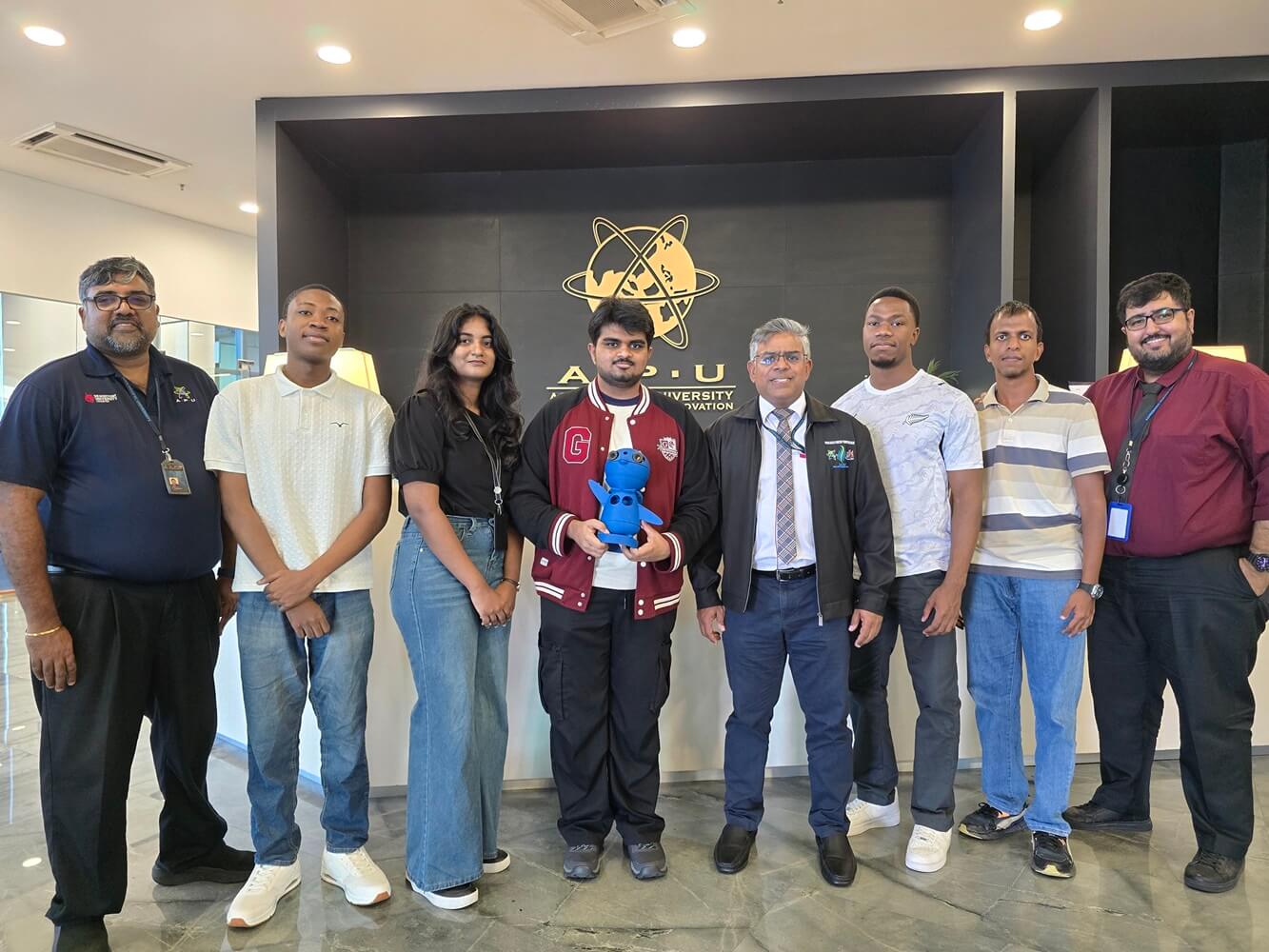
The project was developed by Harshayn Vythilingam, Team Lead and Electrical and Electronic Engineering student; Gayatri Reshma Penjarla, Electrical and Electronic Engineering student; Jeremiah Sibalwa and Mwila Chibesa, Software Engineering students; and Yaswanth Komatineni, Mechatronic Engineering student.
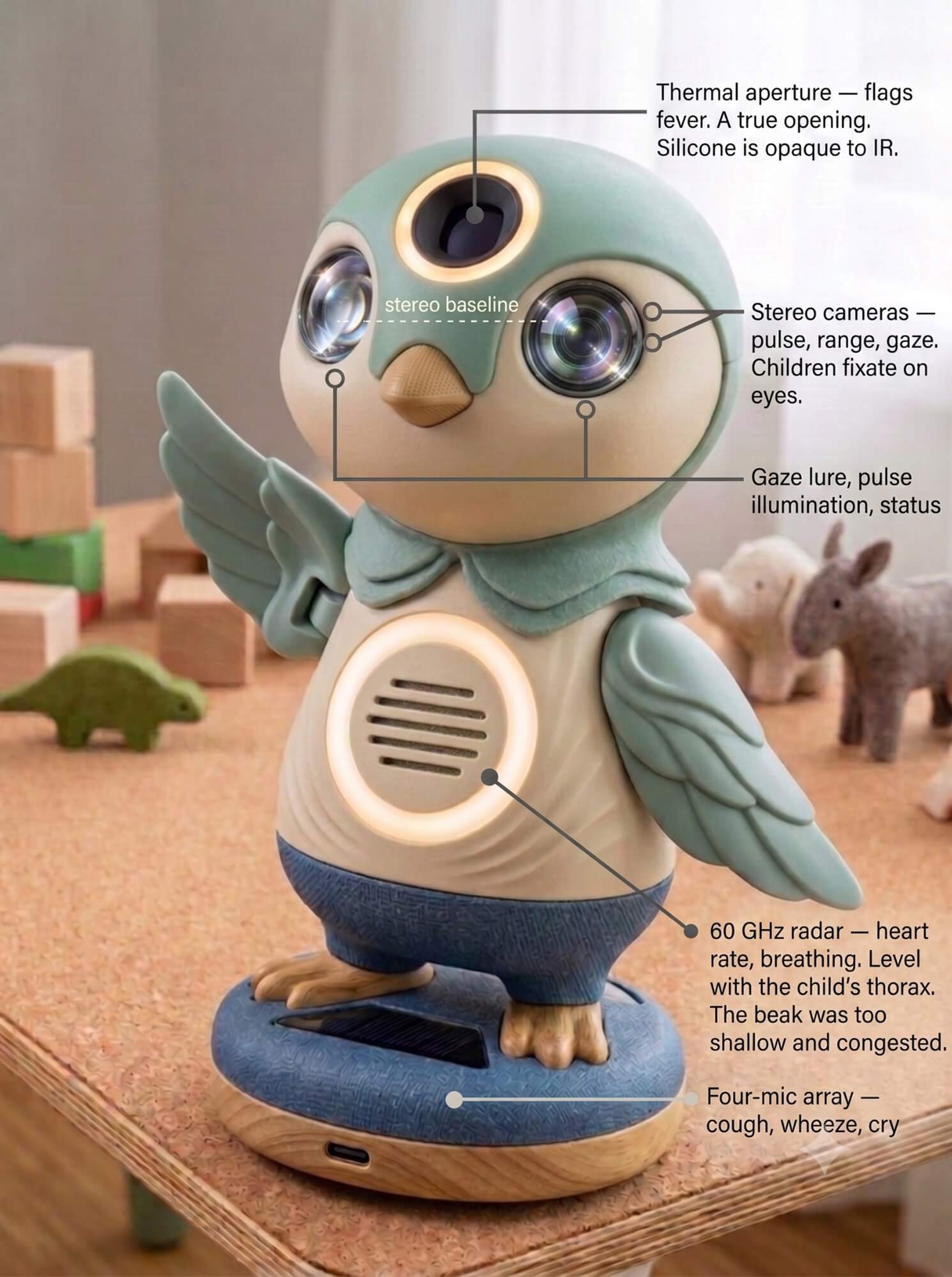
Taking the form of a friendly penguin that sits on a healthcare professional’s desk, Pillay combines camera, thermal, radar and acoustic sensing to screen indicators including heart rate, breathing, fever, pallor and cough patterns – without requiring physical contact.
Pillay was named one of Malaysia’s two National Runners-Up, alongside S.L.I.C. and ZeMor from the other tertiary institutions. The recognised Malaysian projects now progress to the international stage of the James Dyson Award 2026.
Designing Around a Child’s Attention
The inspiration for Pillay came from a practical challenge observed in a rural clinic, where healthcare workers can struggle to obtain routine vital-sign readings from young children, particularly when patient numbers are high and time is limited.
The team’s first answer was not a penguin, but a rattle fitted with sensors.

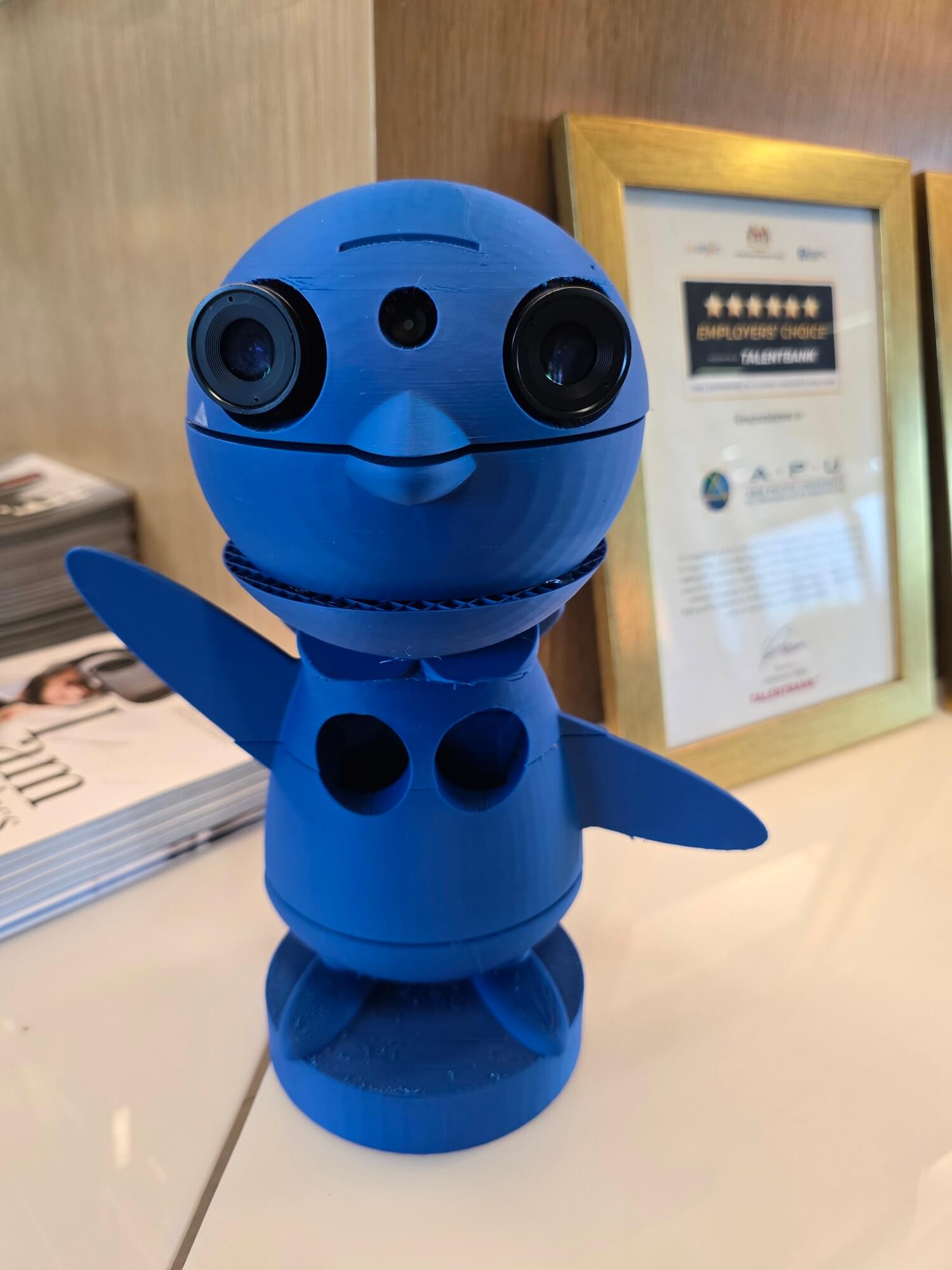
The team’s initial concept of a rattle fitted with sensors failed almost immediately when a toddler put it into her mouth. That failure became a turning point, prompting the team to redesign the prototype as a child-friendly desktop figure – a penguin.
The concept failed almost immediately when a toddler put the rattle into her mouth, making the intended sensor positioning unusable.
That failure became the turning point.
Reviewing the trial, the students noticed something unexpected: the child kept looking at the rattle’s painted eyes. Rather than designing a device a child had to hold, wear or cooperate with, they began thinking about one the child simply had to watch.
“For us, the recognition validates the process more than the product. Our initial prototype was a rattle, and it taught us more by failing than any simulation could: children do not hold still for a sensor, so we rethought the whole object, and Pillay became a penguin,” recalled Harshayn.
The result is a device designed to capture a child’s gaze for approximately 90 seconds, while its integrated sensors conduct contactless screening in the background.
Multiple Sensors, One Simple Outcome
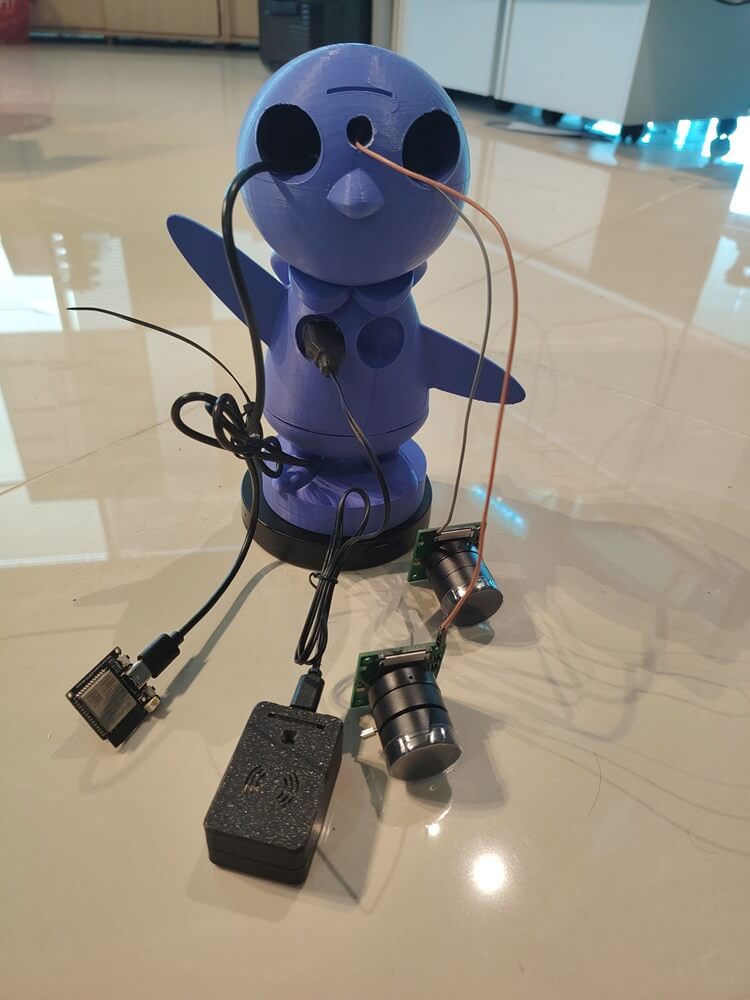
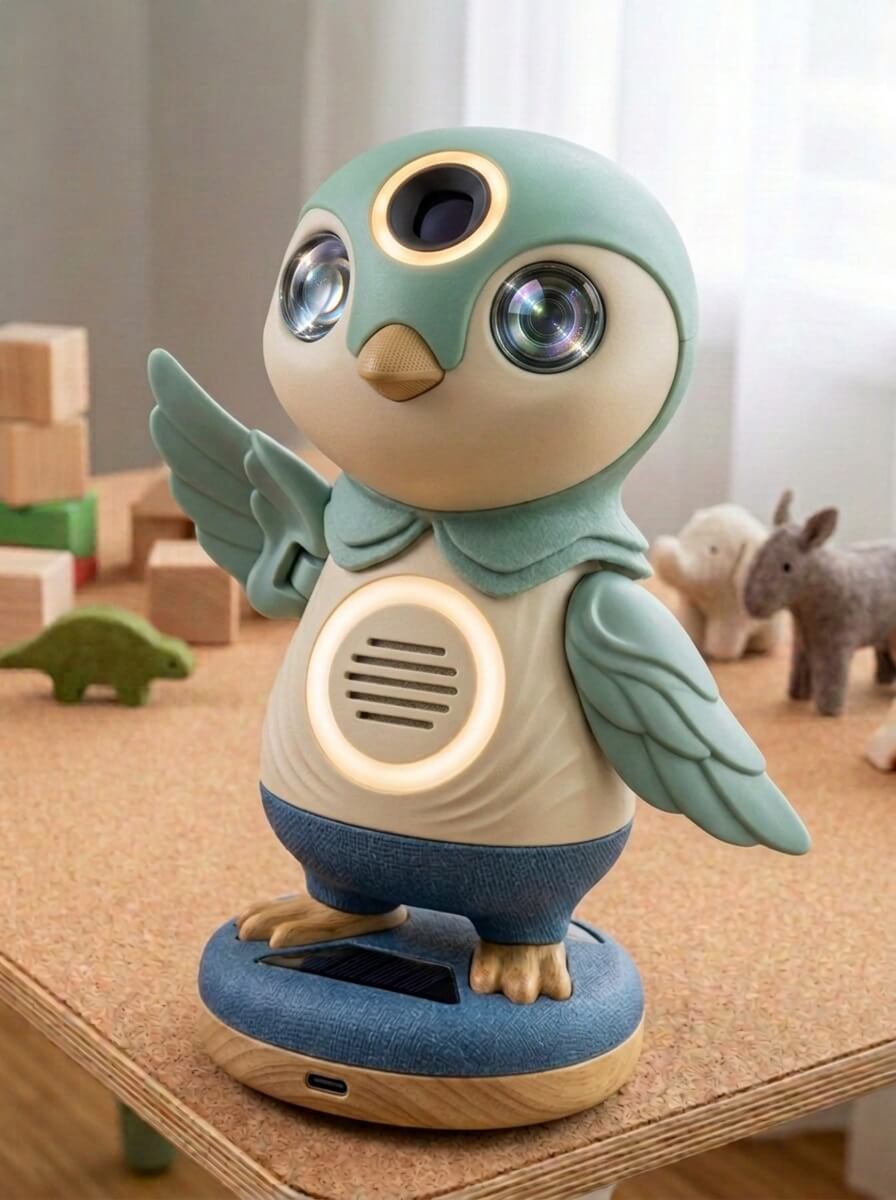
The Pillay prototype showcases its layered sensing system alongside the final product design.
Behind Pillay’s playful appearance lies a layered sensing system.
Stereo cameras positioned behind its eyes detect subtle changes in skin colour to estimate pulse and assess pallor. A thermal aperture in the forehead screens for fever, while radar positioned around the chest monitors breathing through clothing. A microphone array at the base listens for cough, wheeze and abnormal crying patterns.
Importantly, the sensors are designed not merely to collect readings, but also to assess whether those readings can be trusted.
The stereo-camera arrangement, for example, helps determine whether a child is facing Pillay and positioned at an appropriate distance. If movement, distance or positioning makes a particular measurement unreliable, the system is designed to discard it rather than return a potentially misleading result.
Information that passes these checks is processed by Arivaan, the team’s onboard software, together with contextual information such as the child’s age and history.
Pillay then translates the information into a straightforward screening outcome for healthcare workers: “normal”, “watch” or “refer”.
Engineering Through Failure and Redesign
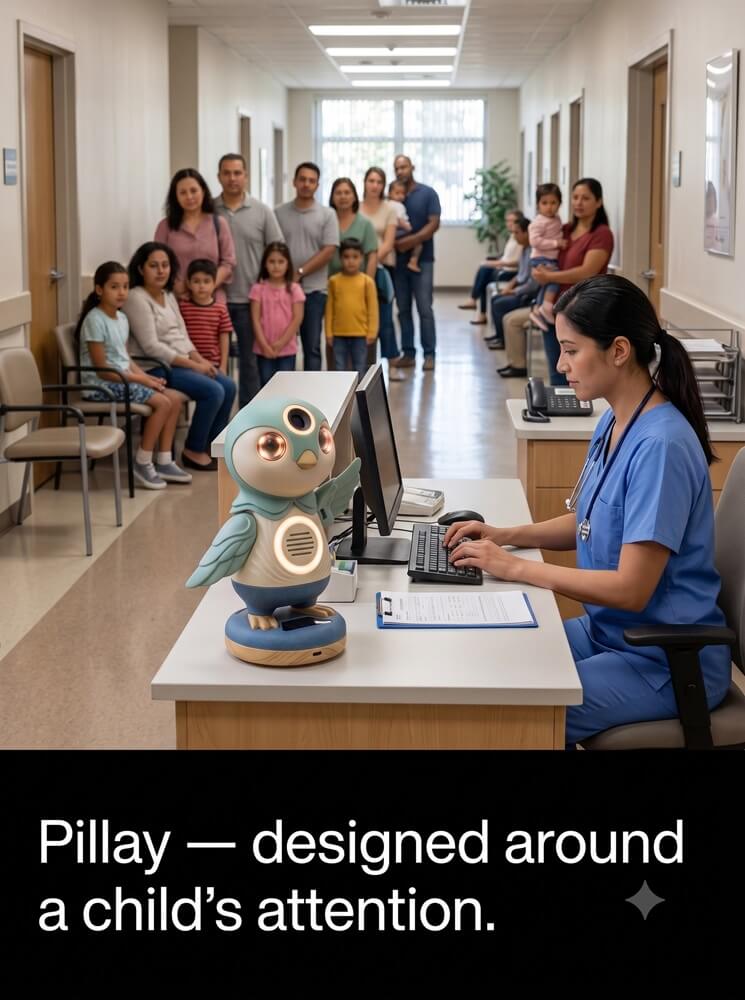
Pillay’s current form emerged not from a single breakthrough, but through repeated testing, failure and redesign.
At one stage, the team discovered that silicone used in an earlier prototype interfered with the long-wave infrared thermal sensor. Another challenge arose when the radar module proved too large for the penguin’s beak, prompting the students to relocate it to the chest and reconfigure the internal layout.
Each challenge required expertise from different disciplines to come together.
Team Delta APU was mentored by Dipl-Ing Inv Ir Narendran Ramasenderan, Head of the Centre of Excellence for Research and Development of Drone & IoT (CREDIT) and Assistant Professor at APU’s School of Engineering (SoE); Mr Krishna Ravinchandra, Manager of CREDIT and Lecturer at SoE; and Prof Ir EUR ING Dr Vinesh Thiruchelvam, APU’s Chief Innovation, Enterprise & Sustainability Officer.
“The strength of Pillay lies in how three disciplines worked together. Electrical and Electronic Engineering students led the sensing systems, power and signal quality; Mechatronic Engineering students refined the enclosure around technical constraints; and Software Engineering students developed Arivaan, the onboard agent that integrates sensor data and produces a simple ‘normal’, ‘watch’ or ‘refer’ flag offline,” said Ir. Narendran.
“What impressed me most was how the team responded to failure. Each setback became a shared engineering problem, with one discipline’s constraints shaping the others’ next iteration. Maintaining Pillay as a screening, rather than diagnostic, tool also demonstrated maturity, discipline and responsible engineering.”
From Prototype Towards Clinical Validation
Despite the national recognition, the team is careful about what Pillay currently represents.
Pillay remains a screening prototype and is not a diagnostic medical device.
The proposed next step is paediatric validation, beginning with bench comparisons against reference monitoring equipment before progressing towards a supervised trial in a Malaysian community clinic.
Ultimately, the students envision Pillay as a screening and triage tool that could support nurses and other healthcare workers in environments where high patient numbers, limited time and constrained resources make routine screening difficult.
Affordability is equally central to that ambition. The team is targeting an eventual cost of approximately RM500 per unit, with the aim of making contactless screening technology more accessible to healthcare settings operating with limited resources.
Recognition That Opens the Next Door
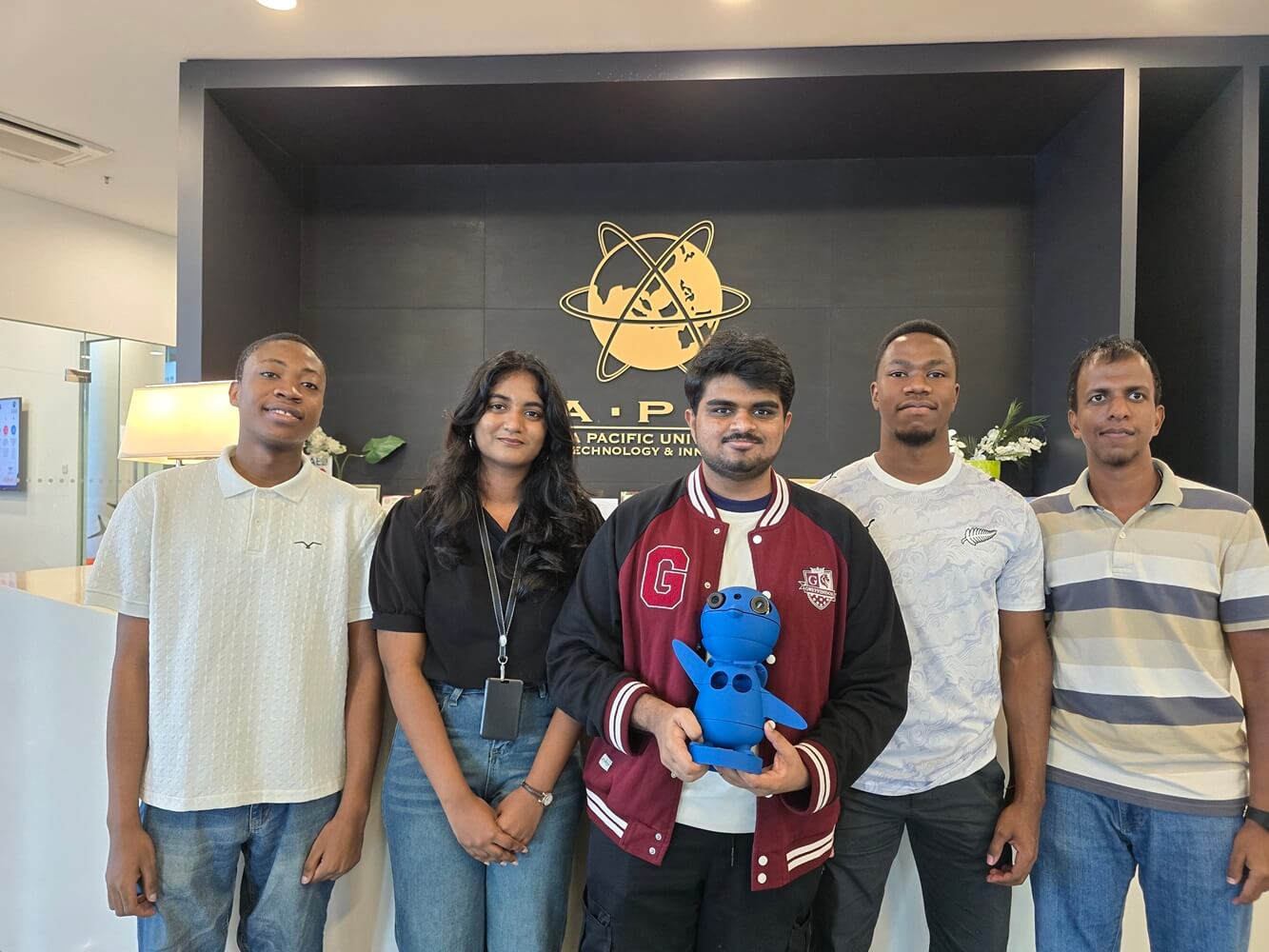
Run by the James Dyson Foundation, the James Dyson Award encourages current and recent engineering and design students to develop practical solutions to real-world problems through iterative design and engineering.
Following the announcement of the national results on 16 September 2026, the competition now moves to the international stage. Dyson engineers will select an international Top 20 shortlist on 14 October 2026, before the International Winner and Sustainability Winner are announced on 4 November 2026.
For Team Delta APU, progressing to the international stage is both recognition of how far Pillay has come and motivation to keep testing what it could become.
“This means a great deal to all of us. It tells us that a student team from Malaysia can take a real problem in children’s healthcare and compete with young engineers from around the world,” said Harshayn.
“Leading a team across Electrical and Electronic, Mechatronic and Software Engineering taught me that every design decision affects another part of the system."
“This recognition shows that our approach works – build, test, learn from failure and improve together. More importantly, it encourages us to take Pillay further towards clinical validation and meaningful use in communities that need it most,” he concluded.
From a rattle that failed to a penguin designed to be watched, Pillay’s journey demonstrates how engineering can advance not only by making technology more sophisticated, but by understanding the people it is ultimately designed to serve.
Watch more about the inception of Pillay here: https://www.youtube.com/watch?v=nqobcfAnC0Q&t=41s